
Filming in Portugal: The Complete Production Guide
Film in Portugal. Here’s Everything You Need.
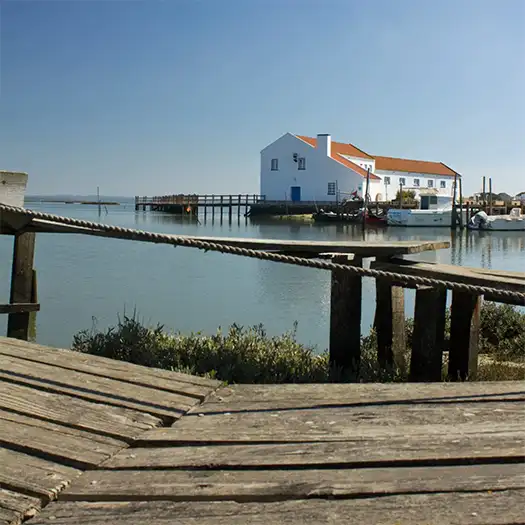
Portugal keeps showing up on call sheets for a reason. Close to 300 days of sunshine per year. A country small enough to drive from north to south in under five hours, yet diverse enough to double as a dozen different worlds: Atlantic coastline, medieval castles, Moorish architecture, modern Lisbon, golden Alentejo plains, dense northern forests. Competitive production costs by Western European standards. A safe country where English is widely spoken and the film commission is genuinely helpful.
Recent productions that have filmed here include House of the Dragon (HBO), Damsel (Netflix) and Star Wars: The Acolyte, partially shot in Madeira. The infrastructure, the crew pool and the locations are ready. What follows is a practical guide to help you plan your shoot.
Filming Permits
Since 2024, permits are required for all filming in public locations in Portugal, regardless of crew size. Applications go through the local City Hall, with a typical processing time of around one week.
Specific locations involve different entities:
Beaches and coastal areas fall under the Harbour Captaincies. National parks and nature reserves require authorisation from ICNF (Nature and Forest Conservation Institute). National monuments and museums are handled by Museus e Monumentos de Portugal or Património Cultural. Inland waters and reservoirs go through APA (Portuguese Environment Agency).
For productions navigating multiple locations, working with a local producer is the most effective way to manage this process. They know which contacts to call and how to move things forward without unnecessary delays.
Financial Incentives
Portugal has built one of the most competitive incentive systems in Europe, managed by ICA (Instituto do Cinema e Audiovisual) and the Portugal Film Commission.
Cash Rebate (FATC) Available to fiction, animation, documentary and VOD productions, both domestic and international. Minimum spend in Portugal of €500,000 for fiction or animation, and €200,000 for documentaries or post-production. Support rate starts at 25% and can reach 30% depending on a cultural test score. In Madeira, the Azores and interior regions, the rebate can go up to 40%.
Cash Refund (launched 2024) Designed for higher-budget productions with a minimum eligible spend of €2.5 million in Portugal. Reimbursement of 30% on the first €2 million, up to 25% on the remainder. Capped at €6 million per feature film or season, and €3 million per episode. Annual budget of €20 million, allocated on a first-come, first-served basis.
The two programmes cannot be combined. For full details and to begin an application, the Portugal Film Commission website is the right starting point.
Visas and Work Authorisation
Portugal is part of the Schengen Area. Most international cast and crew can enter and film for up to 90 days without a visa, and no work permit is required for short-term productions. EU citizens need only a valid ID.
For productions involving foreign crew in more complex contractual arrangements, a local producer can guide you through the relevant requirements and ensure full compliance with Portuguese immigration rules.
Equipment and Customs
Portugal is an ATA Carnet country. Bringing your own equipment from another ATA Carnet member country is straightforward, with no customs duties for temporary imports. Keep your documentation organised and the process is clean.
Drones
Drone filming in Portugal is permitted, but involves two separate authorities and some lead time that catches productions off guard.
First, drone operators need to be registered with ANAC (National Civil Aviation Authority). EU operators with existing EASA registration are already covered. Non-EU operators register at uas.anac.pt, free of charge.
Second, and this is where most productions lose time: any drone with a camera requires a separate aerial filming permit from AAN (National Aeronautical Authority), regardless of whether the flight is recreational or commercial. The AAN process involves the e-AAN portal but still requires physical postal mail at a certain stage. Plan for 3 to 4 weeks minimum before your shoot date.
Restricted zones include an 8 km radius around airports, as well as ports, military installations and power plants. National parks require additional ICNF authorisation. Drone insurance is mandatory for equipment weighing 900g or more. The NAV Portugal drone map at uas.anac.pt is the tool to consult before every flight.
For commercial drone operations on set, working with a local operator or production partner familiar with the AAN process is the most efficient path.
How I Can Help
I’m a DoP based in Lisbon, and I’ve been shooting across Portugal for years, with international teams coming in from different parts of the world.
If you’re planning a shoot here, I’m available as your Director of Photography. Beyond that, I know the locations that don’t show up on the usual lists, the local crew worth calling, and how the practical side of filming in Portugal actually works.
I can point you towards trusted local producers, equipment rental houses and other production contacts, and help you think through your shoot before it starts.
The best productions I’ve been part of started with a conversation early. If you have a project coming to Portugal, get in touch.